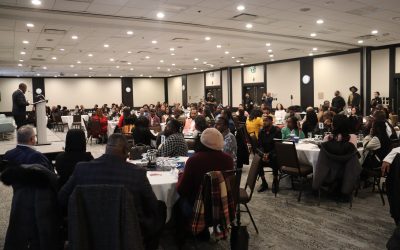
On November 8, the Federation of Black Canadians (FBC) hosted its Law & Policy Forum, funded by the Law Foundation of Ontario. The event welcomed approximately 25 attendees, creating a warm, community-focused space for meaningful discussion on access to justice for Black Canadians.
Exploring Barriers to Legal Justice
The forum opened with FBC’s legal researchers presenting the findings from their summer research project. Their work examined how minority communities experience gaps and barriers within the legal system—from limited access to services, to structural inequities that prevent people from receiving timely, affordable support.
Participants were engaged throughout, contributing thoughtful questions and insights grounded in their own experiences.
Moderator and Panelists
The conversation was guided by Tenisha Noel, Program & Community Engagement Lead at Afrika Outbound and an LLM researcher at Osgoode Hall Law School. Tenisha’s work centers on youth empowerment, Black Canadian history, and addressing systemic discrimination.
The panel brought together leaders from community advocacy, policing, and legal services:
-
Walied Khogali Ali, Policy Strategist & long-time community advocate, highlighted the importance of tenant rights, affordable housing, and equitable policy frameworks.
-
Superintendent Darryl Dawkins, Director of the RCMP’s Anti-Racism and EDI Secretariat, shared insights on strengthening trust and advancing equity within policing.
-
Demar Kemar Hewitt, Executive Director and General Counsel at the Black Legal Action Centre (BLAC), emphasized the role of legal advocacy and strategic litigation in challenging systemic anti-Black racism.
Together, they helped unpack the research findings and offered clear examples of how systemic barriers show up across institutions.
Key Takeaways From the Discussion
A notable moment came when a panelist pointed out that UTM does not have a legal clinic, underscoring how lack of early, accessible legal support creates preventable challenges for students and community members.
During the networking session, participants expressed appreciation for the dialogue and encouraged future sessions to focus on concrete actions and next steps. This feedback will help inform FBC’s ongoing advocacy and program planning.
Looking Ahead
The Law & Policy Forum fostered meaningful dialogue, validated community concerns, and deepened understanding of systemic gaps in legal access. The insights shared will guide FBC’s continued work in shaping equitable, community-informed policy solutions.
FBC remains committed to advancing justice, strengthening community partnerships, and supporting Black Canadians through research, advocacy, and accessible programming.